



(William H. Waller – Endicott College, The Galactic Inquirer, and IAU/OAE/US-NAEC)
It is not an exaggeration to state that galactic ecosystems have spawned pretty much everything that we hold dear – including ourselves. These nebular nurseries have incubated all the stars, planetary systems, and many of the complex molecules known to humanity. From there, myriad planets in orbit around their hosting stars have further refined the organic matter into even more complex biochemicals. On the surface of one particularly moist planet, life took hold, and evolutionary processes led to you and me collectively pondering the wonders of galactic ecosystems as seen under dark skies and in vivid astronomical images. For the 7th Shaw-IAU Workshop on Astronomy for Education in 2025, I presented a poster and paper that introduces galactic ecosystems, delineates their locations within the Milky Way galaxy, describes their multi-phase structures, and discusses their chemical contents. That has since been expanded into an article for The Galactic Inquirer. In the present article, I focus on galactic ecosystems as revealed by recent surveys at radio wavelengths. These surveys offer rich data sets for investigating the physical and chemical character of galactic ecosystems — the “crucibles of creation.”
Galactic ecosystems encompass the varied complexes of inter-relating stellar, nebular, and other matter that are actively forming new stars. These include molecular clouds, cloud cores, protostellar and protoplanetary systems, HII regions and starbursts. Together, the sundry components comprise a functioning environmental unit while responding to even larger environmental influences. Over its lifetime, such a complex is critically vulnerable to any newborn massive stars that it incubates.
The Planck satellite has mapped the large-scale distribution of galactic ecosystems within the Milky Way at far-infrared, sub-mm and mm-wave radio wavelengths (see Fig. 1). Characterizing this galactic “foreground” was necessary to extracting maps of the cosmic microwave background (CMB) – the main goal of the Planck mission. Further multi-wavelength analysis by the Planck scientists has since enabled the separation of the foreground galactic emission into its cryogenic molecular, cool dusty, warm ionic, and hot coronal components. Here, we can see the overall distribution of interstellar phases associated with galactic ecosystems.
The molecular and dusty phases trace where stars are forming inside cold dense clouds, the ionic phase traces the consequences of hot massive stars irradiating their surroundings with extreme ultraviolet light, while the coronal phase traces the torrid aftermath of supernova explosions from once mighty stars within the galactic ecosystems.
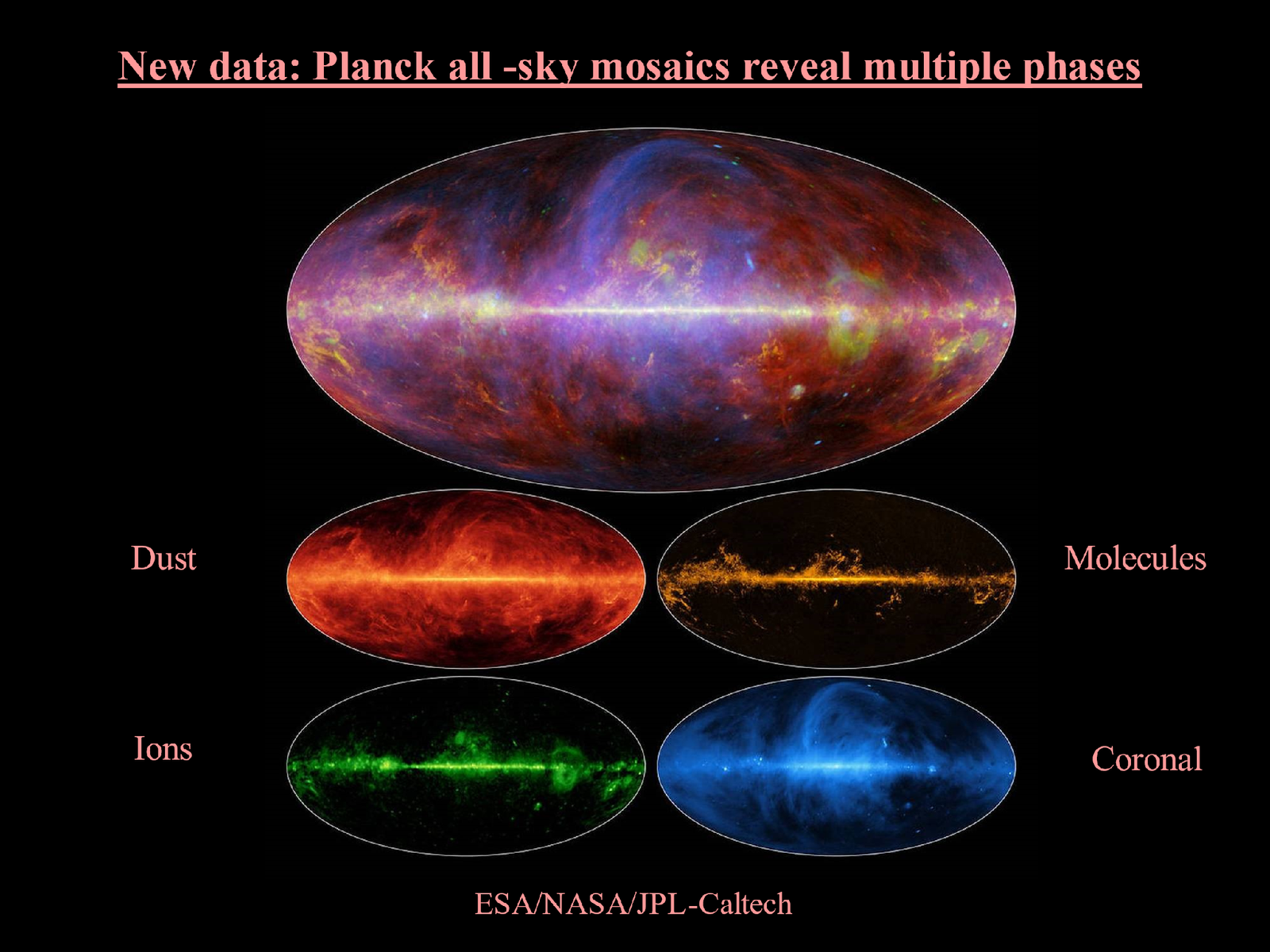
Fig. 1: The Planck space observatory surveyed the entire sky at far-infrared, sub-mm and mm radio wavelengths – mapping the dusty, molecular, ionic, and coronal phases associated with galactic ecosystems.
At higher angular resolution, the Atacama Large Millimeter/submillimeter Array (ALMA) has mapped dense molecular cloud cores residing within the filaments of the Taurus Molecular Cloud. These cores represent the next generation of star and planet forming activity. ALMA has also mapped a fascinating menagerie of protoplanetary systems in the light of warmed dust and various molecules – including an abundance of organic species (see Fig. 2).
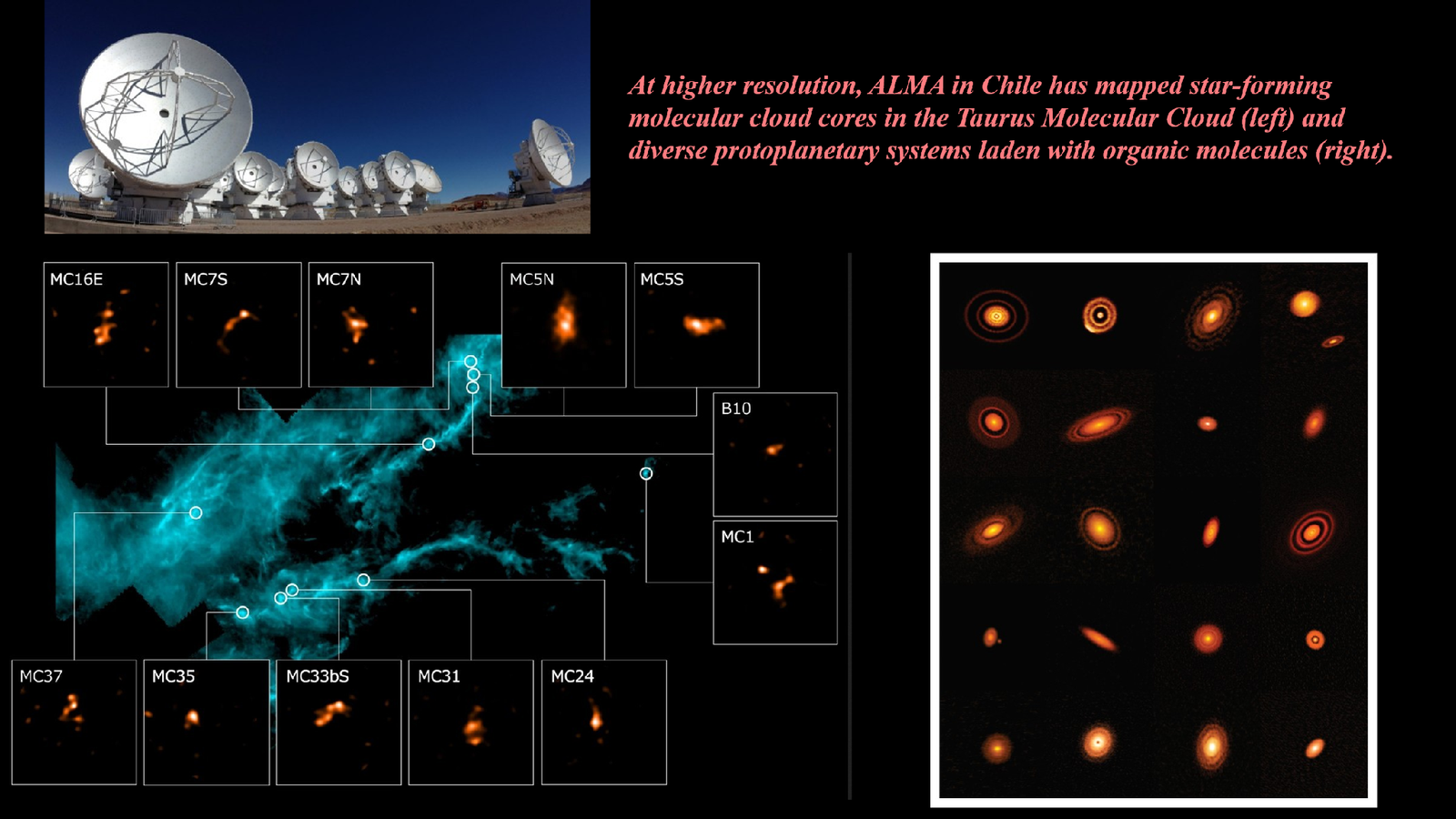
Fig. 2: Montage showing the ALMA telescope array in Chile, the Taurus Molecular Cloud, dense molecular cloud cores within this nearby cloud, and protoplanetary systems of diverse structure.
The single-aperture Greenbank Observatory (GBT), with its sensitive spectroscopic capabilities, has provided detections of more than 344 molecules within galactic ecosystems (see Fig. 3). Some of these molecules have biogenic potential. These include water (H2O), formaldehyde (H2O2), hydrogen cyanide (HCN), ammonia (NH3), methane (CH4), the sugar glycolaldehyde (C2H4O2), and the amino acid glycine (NH2CH2COOH).
Such fecund regions also play host to energetic stellar feedback which can lead to major transformations of the nebular structures along with new forms of nebular chemistries – up to and including biochemicals. For the sake of clarity, definitions of these respective terms follow.
Stellar Feedback: Ultraviolet radiation, powerful winds, and supernova blasts from newborn massive stars can transform the architecture of galactic ecosystems while transmuting their chemical makeup.
Biochemicals: The molecules that play key roles in sustaining life on Earth and perhaps elsewhere – e.g. H2O, H2CO, O2, CH4, HCN, NH3, PO4, amino acids, nucleotides, etc.
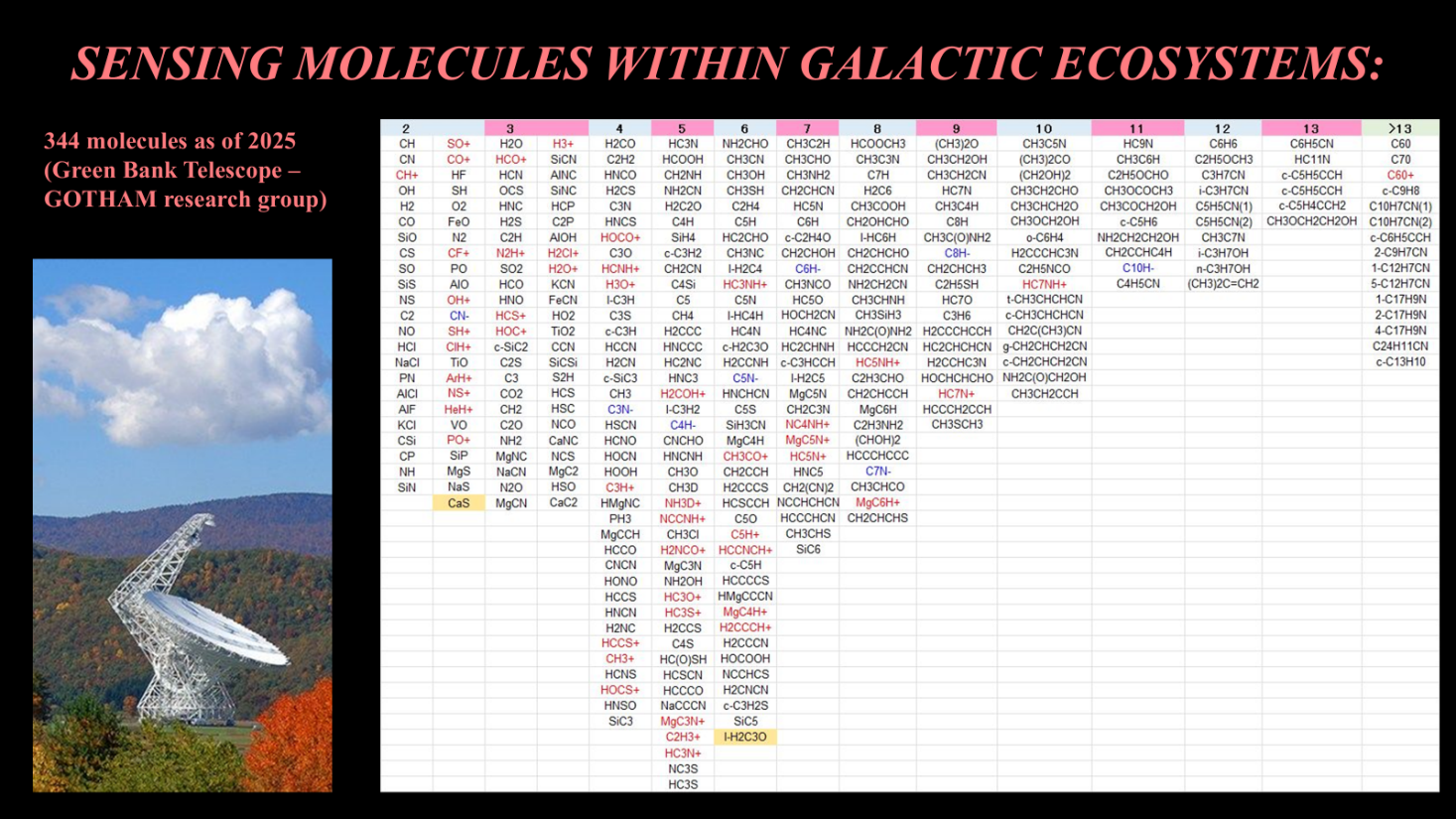
Fig. 3: The Green Bank Telescope (GBT) in West Virginia, USA has detected hundreds of molecules in galactic ecosystems. The vast majority of these detections was obtained from observations of the nearby Taurus Molecular Cloud.
A new book on galactic ecosystems has been published by Springer-Nature as part of its Astronomers’ Universe series (see Fig. 4). Entitled Crucibles of Creation: Exploring the Origins of Stars, Planets, and Life within Galactic Ecosystems, this book engages readers on a guided tour of galactic ecosystems within the Milky Way galaxy and other nearby galaxies — including those in the throes of rampant starburst activity. Illustrated in full color, this book provides a definitive survey of galactic ecosystems and their evolutionary impact. Besides appealing to amateur and armchair astronomers, Crucibles of Creation: … can be used as a primary resource for astronomy teachers and their students (https://link.springer.com/book/10.1007/978-3-032-17258-7). For further information, please contact the author at williamhwaller@gmail.com.
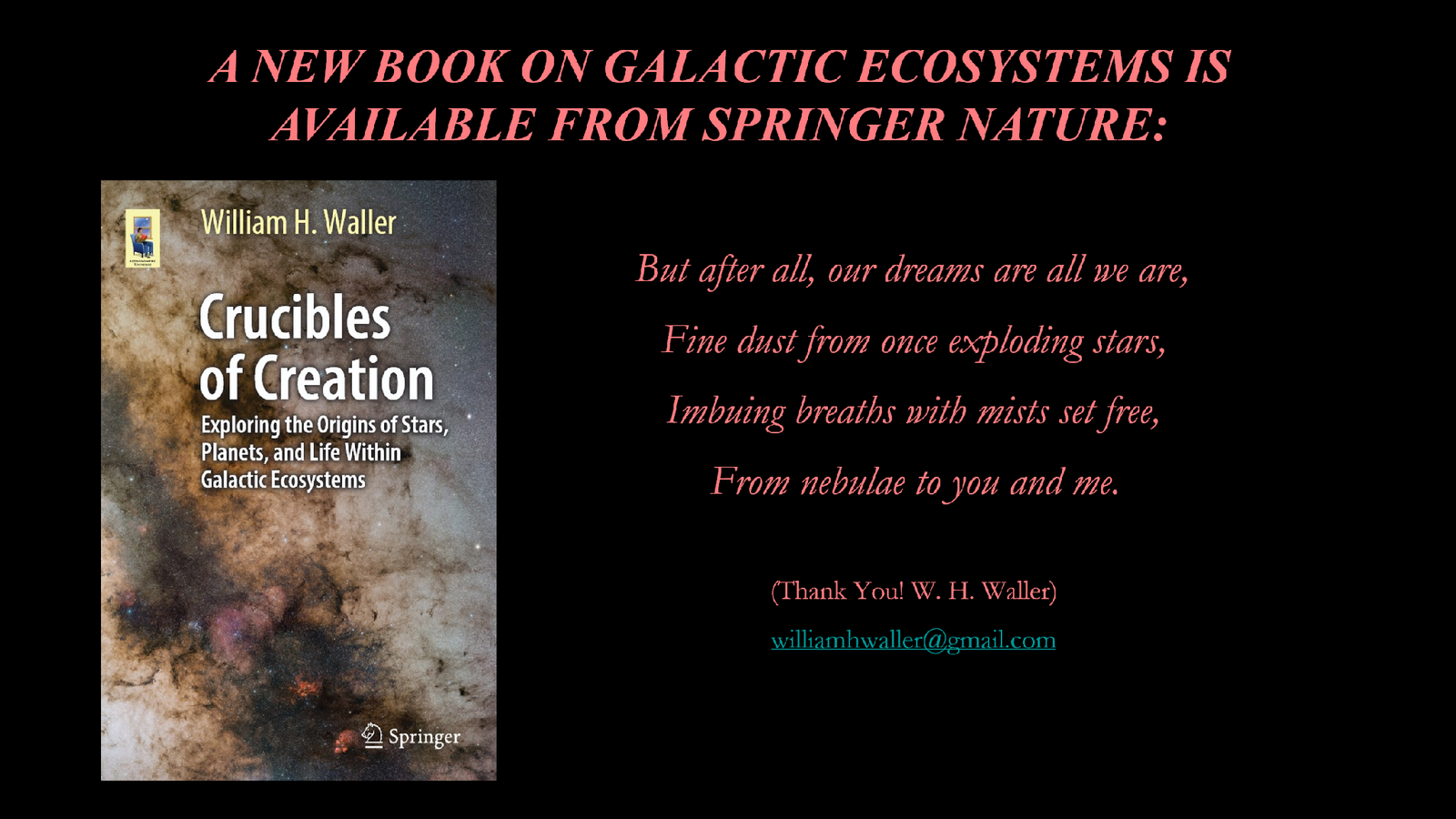
Fig. 4: Cover of book and summative poem on galactic ecosystems.
References:
Waller, W. H. “Exploring Galactic Ecosystems – The Transformative Wellsprings of Stars, Planets, and Life,” in Proceedings for the 7th Shaw-IAU Workshop on Astronomy for Education, 18-21 November (2025) p. 304. https://zenodo.org/records/19111022.
Waller, W. H. Crucibles of Creation: Exploring the Origins of Stars, Planets, and Life within Galactic Ecosystems, NYC, NY: Springer Nature (2025) https://link.springer.com/book/10.1007/978-3-032-17258-7.
A shorter version of this article will be published as part of the proceedings of the 2026 IAU OAE Conference on Astronomy for Education that is scheduled to occur in November 2026.